
It takes a longer time to avail of these loans, owing to tight due-diligence process of banks.

Due to tax associations with the fiscal-ending, April is a month of SIP renewal. So, the April numbers will be important and may perhaps, mark a change in retail attitude.

The Reserve Bank of India (RBI) has clarified that loans which have remained standard without any defaults as of March 1, 2020, will be eligible for restructuring under the pandemic-related resolution framework issued in August.

The Financial Stability and Development Council meeting on Tuesday started with an air of tension in the room. An official present described the participants' body language as "tetchy". However, once presentations and discussions begun, the mood considerably eased.

The RBI panel has also recommended a government-sponsored 'fund of funds' of Rs 10,000 crore to support the venture capital and private equity firms investing in the MSME sector.

'The real estate sector has been badly bruised because it has become too reliant on funding from NBFCs, including housing finance companies. 'When the NBFC industry was rocked late last year by a large default, the real estate sector was hit hard. 'An intricate web of links between rural incomes, construction activity and shadow banks are fuelling the economic slowdown', says Pranjul Bhandari.

If you have an active trading account or have consumer loans or thinking of taking out a loan, consider investing in NBFCs, says Devangshu Datta

'Returns can be very variable in equity markets.' 'That is why I tell small investors don't put 100 per cent of your money in equities, even if you are young.'

In India, it is not easy to fight it out with the large banks which are nimble-footed and technology-savvy and are continuously innovating on the retail turf with newer products for customer acquisition.

As the government plans to take sector-specific steps to tackle the slump, Finance minister Nirmala Sitharaman will soon hold talks with representatives from various sectors to get and take steps so that the confidence of those sectors can be restored.
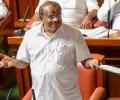
Kumaraswamy predicted that the political instability would continue in the state.

While weather forecasters remain divided on how the monsoons will play out in India over the next few months, analysts believe the news at the current juncture - at best - can trigger a knee-jerk reaction in the markets. They believe it is too early to say whether the sub-par monsoon on account of El Nino can seriously dent the market sentiment in the short-to-medium term. "These are just initial forecasts and we will have another round / status update from the weather forecasters a month down the line.

Ajay Piramal bets highly on infrastructure, realty

Nifty, which has struggled around 8550-8560 levels managed to blast past this resistance and close above the psychological mark of 8600.

'Investors should reduce cash gradually and look for value investing.'

'One way of doing this could be offering credit guarantee to the banks, say 10 per cent, for fresh loans given to micro, small and medium enterprises,' observes Tamal Bandyopadhyay.

Corporate leaders said a stable government at the Centre will help boost infrastructure spend, address agricultural distress, and encouraging employment.

The move comes within months of a crisis at JPMorgan Asset Management Company.

The biggest challenge with public sector banks is the processing time, which is why starting early helps.
An NBFC must actively manage its collateral positions, differentiating between encumbered and unencumbered assets, and monitor such assets so that they can be mobilised in a timely manner, central bank says in circular.

Due to the prevailing uncertainty, the risk of loans going bad has certainly increased. This may result in lenders following risk-based pricing more diligently, notes Naveen Kukreja, CEO, Paisabazaar.com

The economic slowdown has made it difficult for companies to record financial closure of a few awarded projects.

It will be the first to go, in what has become an overcrowded segment since India first allowed futures trading in commodities in 2003.

This is one of the many such cases that helped to create an acute fear psychosis among public sector bankers, reveals Tamal Bandyopadhyay in his fascinating new book Pandemonium: The Great Indian Banking Tragedy.

Amid tax treaty uncertainties, India's share of the number of investments made by global companies through Mauritius has almost halved in the past two years even as Africa's share has surged significantly.

Moody's said the government will face challenges in achieving its deficit target for the fiscal year ending March 2021, amid persistent structural and cyclical headwinds to growth.

NBFCs are mainly dependent on funding their operation from their own cash flows.

The Reserve Bank of India (RBI) on Thursday paved the way for niche banking by issuing draft guidelines for setting up payment banks and small banks.

In a soon to be published book, 'Of Counsel: The Challenges of the Modi-Jaitley Economy,' former chief economic advisor Arvind Subramanian says though RBI has a good reputation, it does not mean it's always right, as for years, the RBI was unable to grasp the seriousness of the loan repayment problems or identify the prolonged frauds of Nirav Modi and the likes.

The niche banks - small finance and payments banks -have been set up to further the regulator's objective of deepening financial inclusion.
EC received the RBI proposal in the first week of this month, soon after the model code of conduct came into force on March 5.

The purchase or construction of houses by large numbers of people can add meaningfully to India's economic growth, points out Neelkanth Mishra.

Given the strong growth in Asia and easy monetary stance taken by central banks other than the US Federal Reserve (US Fed), overseas investors will soon start re-investing in risky assets, says Abhiram Eleswarapu, head of equity research, BNP Paribas Securities India.

'Real estate loans are given in the garb of retail loans, sourcing money cheap from the NHB refinance window.' 'This loophole is being plugged,' notes Tamal Bandyopadhyay.

Every 30 seconds its website is connected to an SME for a loan, every five minutes it evaluates a loan, and every 20 minutes it disburses a loan.

In essence, follow the private-equity approach to personal investing and treat each investment decision as if it is a matter of life-or-death, because it is, suggests Avinash Luthria.

'If India can only grow at 5%, why bother spending time on the country?' asks Akash Prakash.

With the Sensex again nearing 28,000 points, investors can make good returns with a one-two year horizon.
'It may sound like sacrilege, but does it really matter if the global raters downgrade India for fiscal slippage?' asks Tamal Bandyopadhyay.

'Without bold action to deal with our banking crisis, count on the economy's doldrums to continue for much longer than most of us anticipate,' says Rahul Jacob.
